

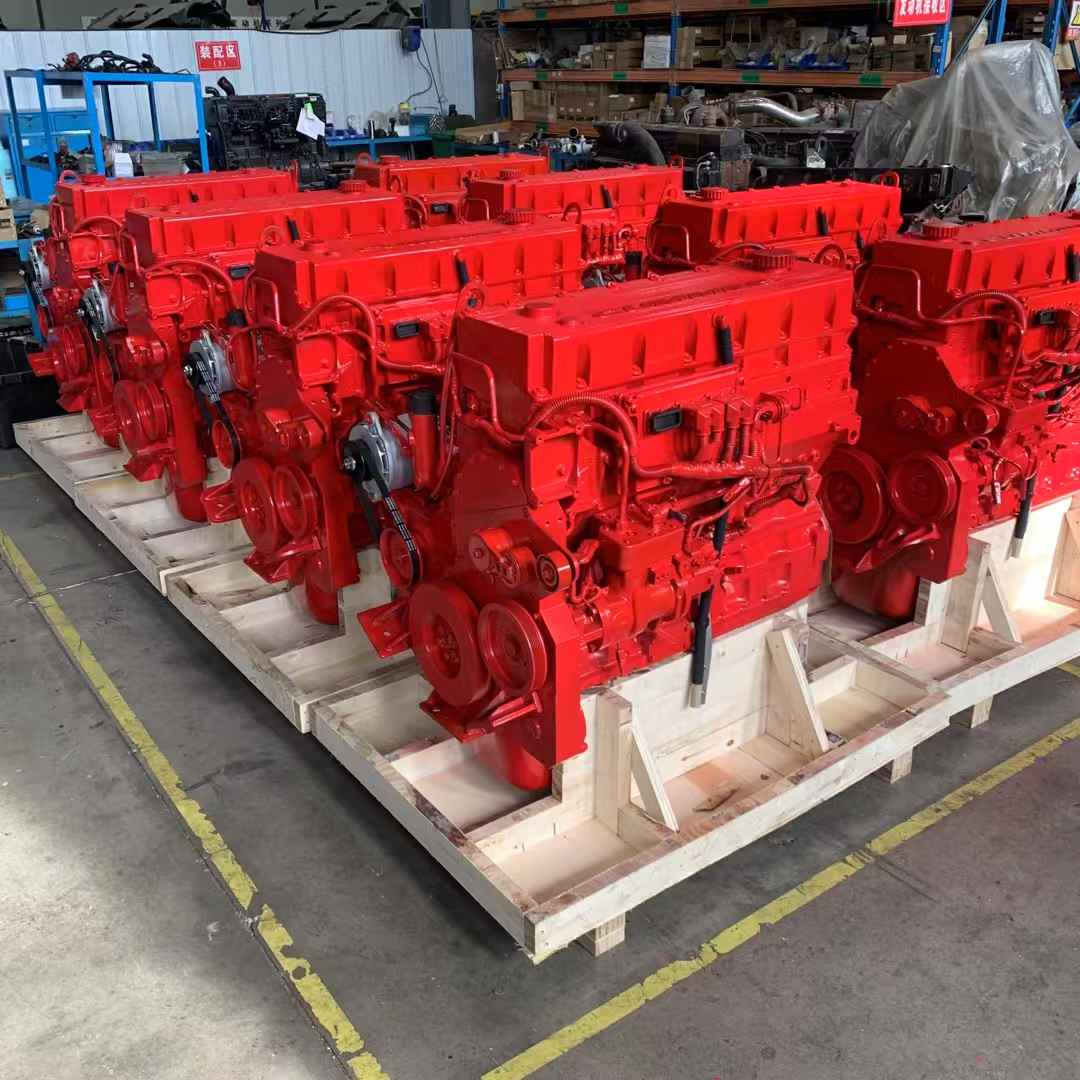
It is easy to understand why mining companies attach great importance to the long-term stability of equipment. Operators demand machinery that can deliver return on investment, operate reliably for years under harsh conditions, and minimize unplanned downtime.
Engines are critical to overall equipment performance. Therefore, Cummins takes a long-term perspective in supporting mining companies, combining a century of engineering expertise with an extensive service network to deliver robust performance throughout the entire engine lifecycle.
The practical value of this approach can be reflected in multiple aspects.
Extend Engine Service Life Through Data and Collaboration
Extending engine service life is one of the most effective ways to boost productivity and cut costs. Simply put, a longer-lasting engine benefits mining companies in two ways: fewer repairs over the equipment lifecycle and prolonged overall engine service life. Cummins achieves this by collecting real-world operational data and leveraging engineering expertise to optimize engine performance and reduce wear.
The QSK60 engine deployed on large mining excavators serves as a perfect example of this philosophy. Initially rated for a service life of 12,000 hours under typical load conditions, Cummins has extended its overhaul life to over 18,000 hours through rigorous durability testing, component optimization and improved maintenance practices. These enhancements stem from collaborative customer projects, enabling engineers to further refine engines to tackle the challenges of specific mining environments.
Durability
Through stringent durability testing, component optimization and upgraded maintenance practices, Cummins has extended the service life of its legendary QSK60 engine to more than 18,000 hours.
Longer engine service life reduces overhaul frequency, translating to less downtime and lower overall operating costs, and delivering greater value for mining operators. This approach proves that combining engineering expertise with field experience can yield substantial benefits throughout the engine’s full lifecycle.
To ensure mining equipment operates as intended, mining companies need real-time visibility into asset conditions at job sites. Modern connected systems enhance this visibility by providing real-time operational insights.
PrevenTech® Remote Monitoring
Cummins PrevenTech® is an intelligent integrated solution for engine reliability and performance. It combines real-time data monitoring, advanced predictive analytics and round-the-clock expert support to keep Cummins engines running at optimal performance. Connected engines trigger alerts for urgent or potential issues and offer maintenance recommendations based on actual operating conditions.
Cummins launched the updated PrevenTech® platform in April 2025. Designed by Cummins experts exclusively for Cummins engines, PrevenTech® features proprietary datasets interpreted only by Cummins, backed by 24/7 Cummins Care support.
PrevenTech® empowers operators to:
- Optimize maintenance cycles across sites with data insights to enhance overall performance
- Track component wear to schedule required maintenance and maximize uptime
- Remotely monitor engine health to predict maintenance needs before potential failures occur
- Proactively plan downtime and repairs to minimize operational disruption
Even with optimal preventive measures, engines still require regular maintenance. Repair and servicing needs — especially unexpected breakdowns — can be challenging to manage, while accessible support services can effectively ease such pain points.
Global Coverage & PowerCare™ Cost Per Hour (CpH)
Cummins supports engine service life and reliability not only through product design and advanced analytics, but also via its global extensive service network. Spanning over 190 countries across six continents, the network includes more than 600 distribution locations, over 3,700 certified high-horsepower technicians and 17 high-horsepower engine overhaul centers.
Cummins is committed to delivering customized service solutions tailored to individual mine requirements, with its flexible PowerCare™ Cost Per Hour (CpH) contract being a flagship offering. The contract provides predictable maintenance costs, covering parts, labor and both planned and unplanned maintenance throughout the engine lifecycle. Customers under CpH contracts supported by Cummins’ global service network achieve engine availability rates of over 97%.
Cummins PowerCare™ CpH customers maintain engine availability above 97% while keeping maintenance costs well controlled.
By forecasting maintenance expenses related to predictive upkeep, mid-life upgrades and rebuilds, mining companies can mitigate operational risks.
Whether under a CpH contract or not, Cummins maintains sufficient inventory of standby and replacement engines to ensure uninterrupted mine operations during repairs.
Expert Engine Rebuild
One key advantage of Cummins engines is their design capability to withstand more than three rebuild cycles. When rebuild is required, strategic investment is essential to secure optimal long-term value.
Cummins’ 17 global High-Horsepower Engine Rebuild Centers (MRCs) are dedicated to extending the service life of high-horsepower engines, including iconic models such as QSK38, QSK50 and QSK60. Following a six-stage process, engines are disassembled, cleaned, inspected, re-machined, rebuilt with genuine Cummins parts and fully tested to meet or exceed original factory standards. Rebuilt engines come with dedicated rebuild warranty coverage.
Engine rebuild offers a cost-effective alternative to full replacement, improving operational efficiency, lowering environmental impact and maximizing the value of existing assets without the expense and downtime of purchasing new engines. A typical rebuild takes around 35 days, during which operations resume immediately with a standby engine provided by Cummins. Cummins’ High-Horsepower MRC network also advances its sustainability goals: compared with new engine manufacturing, rebuilds reduce raw material consumption by 85%, recycle process water and minimize waste output.
At Cummins’ latest high-horsepower MRC facility in Kraków, Poland, technicians are rebuilding Cummins engines for Komatsu customers.
Engine rebuild also presents an opportunity to adjust equipment configurations and boost efficiency based on actual mine conditions.
HPI to MCRS Upgrade
Many operators are upgrading their QSK60 and QSK78 engines from the legacy HPI fuel system to Cummins Modular Common Rail System (MCRS). For maximum convenience, this upgrade is completed concurrently with major engine overhauls at Cummins High-Horsepower MRCs.
The MCRS system delivers multiple advantages:
- 3-5% fuel savings via precise high-pressure fuel injection
- Up to 63% reduction in particulate emissions compared with the traditional HPI system
- Up to 10% longer service life after overhaul
- Smoother operation and faster cold-start performance
- Lower total cost of ownership
Precise fuel delivery eases stress on engine components, improving efficiency and reliability. Operators gain predictable performance improvements, with actual gains varying according to mine profile, equipment usage and operating conditions.
Custom Engine Calibration
Cummins offers on-site customized calibration upgrades for QSK38 to QSK95 series engines, optimizing combustion and fuel delivery for specific working conditions. By evaluating factors such as site profile, average load, tire pressure, ambient operating temperature and operator behavior, Cummins builds comprehensive datasets and performs targeted calibration. This reduces engine fuel consumption and CO₂ emissions by 2% to 5% without compromising reliability or productivity.
For operators, these upgrades deliver substantial fuel savings while maintaining engine performance, cutting immediate operational costs and supporting environmental goals. For those pursuing further decarbonization, hybrid solutions provide a future-ready pathway.
Hybrid Electric Vehicle (HEV)
Hybrid retrofitting integrates internal combustion engines with battery electric systems to deliver flexible energy management for mine haul routes. Hybrid technology creates critical opportunities for the mining industry’s energy transition while leveraging its massive existing asset base.
Hybrid systems enable operators to:
- Recover energy via regenerative braking
- Utilize battery power during off-peak energy demand
- Reduce fuel consumption and CO₂ emissions by 15% to 30% depending on mine conditions
Reduced engine load also lowers maintenance frequency and extends engine service life. Cummins launched its first hybrid retrofit pilot projects in 2024 and expanded large-scale hybrid retrofit capacity in 2025 through the acquisition of First Mode’s assets. Early deployments include Komatsu 930E-4 haul trucks in Chile, with additional pilot projects planned across North America and Latin America.
Cummins and Komatsu recently signed a Memorandum of Understanding (MOU) to jointly develop hybrid systems for heavy-duty surface mining haulage equipment.
Hybrid systems retain operational reliability and familiar workflows for operators while cutting fuel consumption and emissions, offering a practical pathway for gradual decarbonization without full electrification.
Dual-Fuel Ethanol/Diesel System
Cummins is also advancing a clean-fuel decarbonization pathway achievable through retrofits of existing fleets. In partnership with Vale and Komatsu, Cummins is developing a dual-fuel system enabling mining trucks to run on ethanol-diesel blends. Retrofitted trucks can operate on up to 70% ethanol, potentially cutting CO₂ emissions by as much as 50%.
Engine testing will continue through 2026, followed by field validation. Requiring no major infrastructure or fleet overhauls, the dual-fuel system offers a cost-effective option for operators seeking significant emission reductions.
Plug-and-Play Fuel Compatibility
To support ongoing decarbonization in mining, Cummins engines are fully compatible with drop-in alternative fuels such as Hydrotreated Vegetable Oil (HVO) and biodiesel blends. These fuels work seamlessly with existing engines and infrastructure, avoiding the high capital expenditure of alternative solutions while progressing toward decarbonization targets.
For example, hybrid engines running on 55% HVO can achieve up to 50% well-to-wheel CO₂ reduction. This plug-and-play fuel integration allows operators to lower environmental impact without major fleet or facility modifications, delivering substantial emission cuts with no excessive costs or lengthy integration lead times.
A Balanced Path Forward
Given fleet requirements, existing infrastructure constraints and remote operating locations, internal combustion engines remain the foundation of mining power.
Through strategic partnerships, mining companies can secure long-term aftermarket support and technical upgrades for these high-horsepower power solutions, protecting investments across the entire engine lifecycle.
By combining proven engine technology with innovative emerging solutions, Cummins maximizes engine service life and operational reliability, while delivering a viable, actionable pathway to decarbonization.